
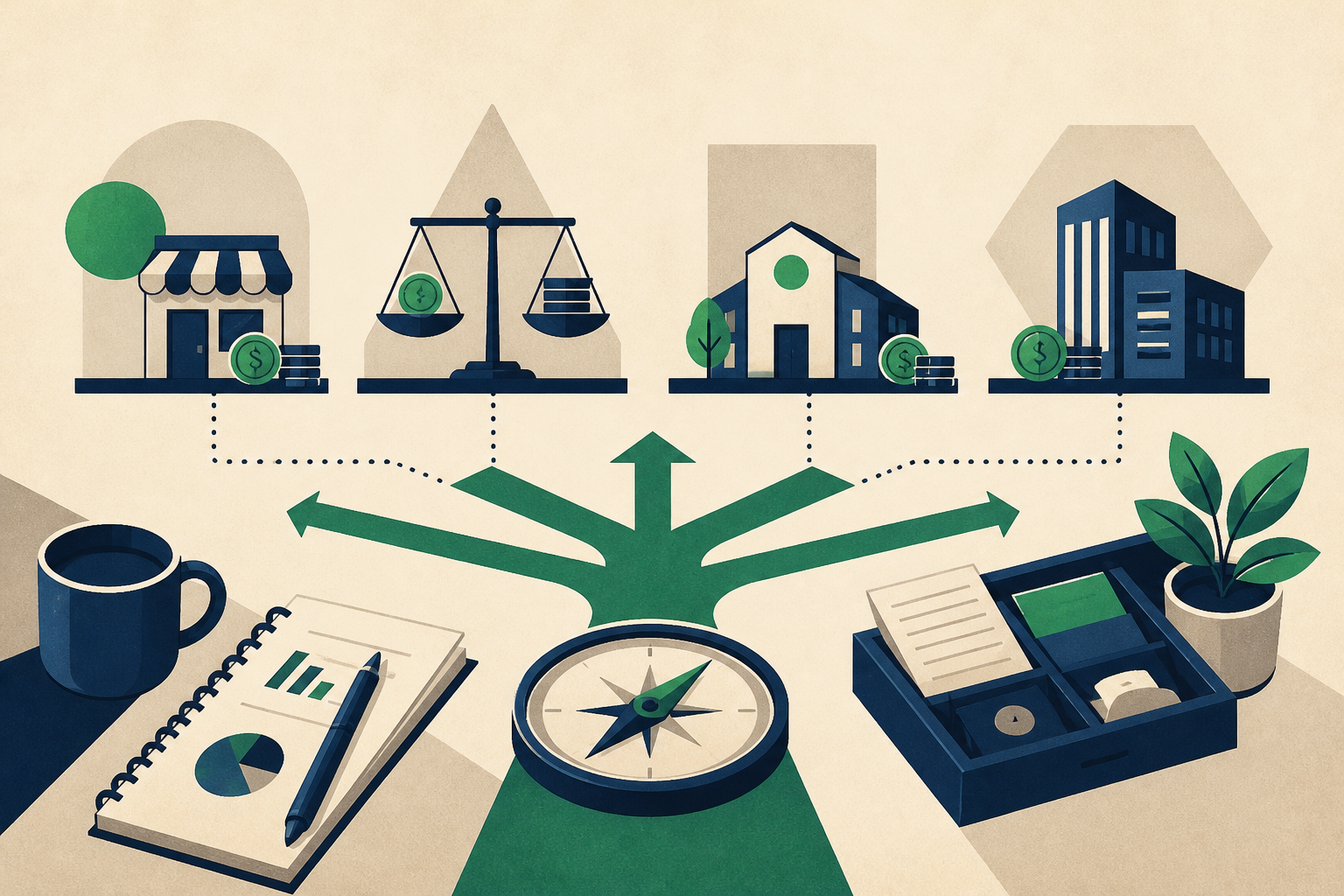
Are you paying yourself the right way?
Paying Yourself Isn't One-Size-Fits-All
One of the most common questions I hear from business owners is a simple one: "How do I actually pay myself?" The honest answer is that it depends on how your business is set up. The method that's perfectly fine for one owner can create tax headaches for another.
Let's walk through the basics so you understand how it works and where it's worth getting a professional in your corner.
Sole Proprietors and Single-Member LLCs
If you're a sole proprietor or a single-member LLC (one that hasn't elected to be taxed as a corporation), there's good news: paying yourself is usually straightforward. You generally take what's called an "owner's draw" which is money you move from the business to yourself.
Here's the key thing to understand: a draw is not a paycheck. You don't withhold taxes from it the way an employer would. Instead, the business's profit is reported on your the owner's tax return, and you will typically owe both income taxes and self-employment tax on those profits. Note that whether or not you actually took any money out is irrelevant.
Because nothing is withheld, smart owners set aside a portion of profits for taxes and should make estimated tax payments during the year. That habit alone saves a lot of April surprises.
Partnerships
If you own a business with partners, you generally don't get a W-2 paycheck either. Partners usually take draws and in some cases may receive "guaranteed payments" for their work. As with a sole proprietor, the profits flow through to each partner's personal return.
The details here get specific fast, so this is a good area to map out with your tax pro and spell out clearly in your partnership agreement.
S-Corporations: The Salary-Plus-Distributions Model
Things change if your business is taxed as an S-corporation. If you're an owner who actively works in the business, you're generally expected to pay yourself a reasonable salary through actual payroll with taxes withheld and payroll filings done properly. On top of that salary, you may take additional cash as distributions (which is the S-corporation name for draws).
Why does this matter? The salary portion is subject to payroll taxes, while distributions are treated differently. That's exactly why the IRS cares that the salary is "reasonable" and not artificially low. What counts as reasonable depends on your role and responsibilities, your industry, and what similar work would pay it's not a one-line formula.
If you're an S-corp owner, don't guess at this. Setting your compensation is a conversation worth having with a tax professional every year.
C-Corporations
Owners who work in a C-corporation are typically paid a salary as employees, with regular payroll and withholding. Additional money can come out as dividends, which have their own tax treatment. Again, the specifics depend on your situation.
A Few Habits That Help No Matter Your Structure
- Keep business and personal money separate. A dedicated business bank account makes paying yourself and tracking it far easier.
- Plan for taxes as you go. Setting aside money for taxes beats scrambling later. Tax situations are as unique as DNA, so there is no one right rate to use. And moreover it may change from year to year. I like to suggest a minimum of 20% of your profits but that is NOT enough for some structures or situations, So talk with your tax professional to develop a rule of thumb.
- Document how you pay yourself. Clean records protect you if questions ever come up.
- Revisit it yearly. As your profits grow or your business structure changes, the best approach can change too.
The Bottom Line
There's no single "right" way to pay yourself but there is a right way for your business structure and situation. Understanding the general rules helps you ask better questions, but the exact method, amounts, and timing are worth reviewing with a tax professional who knows the current rules and your specific numbers.
Get this part right, and you'll save yourself money, stress, and more than a few headaches down the road.
Want the full strategy?
Dan's education goes deeper than any article can. Start with the free introduction.
Start the free education